🧠 Background & Motivation
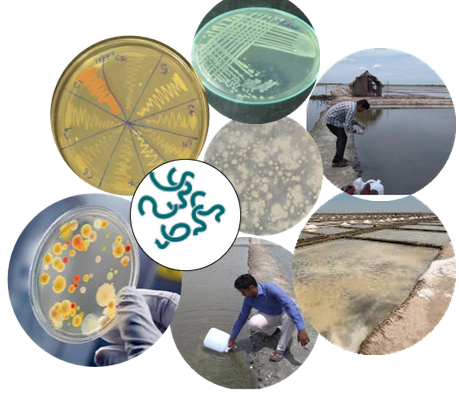
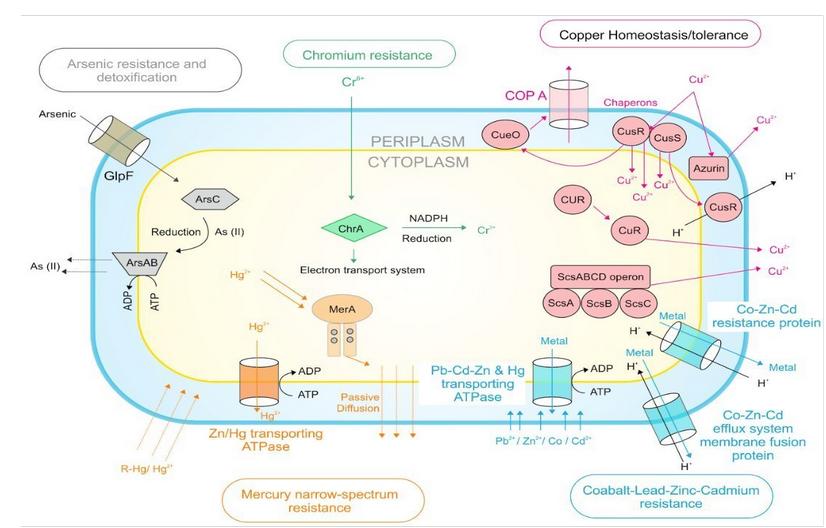
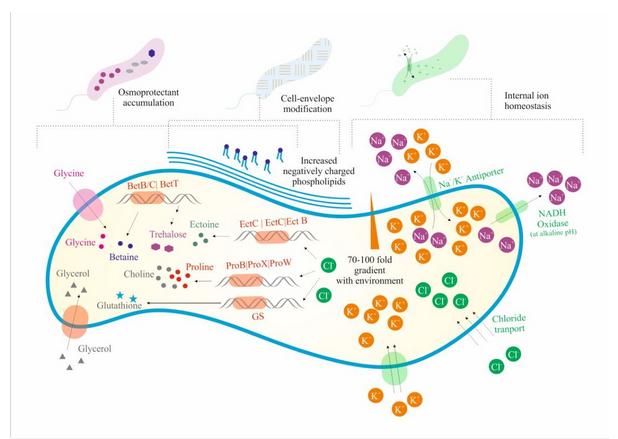
Extreme saline environments such as salt pans impose strong selective pressures on microbial life, requiring unique physiological, metabolic, and genomic adaptations. The Marakkanam salt pan (South India) is characterized by extreme fluctuations in salinity (19–490 ppt), high ultraviolet radiation, and elevated heavy metal concentrations. While several halophilic bacteria from this ecosystem have been isolated for their industrial enzyme and antibiotic production, the genomic basis of their stress tolerance and survival strategies remains poorly understood.
This PhD project focused on characterizing both cultivable and uncultivable halophilic bacteria from the Marakkanam salt pan, using Salinivibrio sp. as a model organism to elucidate genomic, physiological, and metabolic mechanisms enabling survival under multiple environmental stressors.
🎯 Research Questions & Objectives
👨🔬 My Role
This project represents my doctoral research (PhD).
🧩 Challenges & Solutions
Challenge 1: Difficulty in culturing and DNA extraction due to extremely high salt concentrations
Solution: Developed customized growth media using source water from the salt pan, improving cell recovery and DNA quality.
Challenge 2: Establishing experimental and computational workflows as the first PhD student in the laboratory
Solution: Independently optimized cultivation protocols, sequencing workflows, and bioinformatics pipelines while building foundational lab infrastructure.
🛠 Methods & Tools
*Data & Sequencing
*Bioinformatics
📄 Publications
John J, Vinu Siva, Kumari Richa, Aditya Arya, Amit Kumar.
Life in high salt concentrations with changing environmental conditions: Insights from genomic and phenotypic analysis of Salinivibrio sp.
Microorganisms, 2019.
John J, Vinu Siva, Kumari Richa, Aditya Arya, Amit Kumar.
Unveiling cultivable and uncultivable halophilic bacteria inhabiting Marakkanam salt pan, India, and their potential for biotechnological applications.
Geomicrobiology Journal, 2020.
John J, Dineshram R, Hemalatha KR, Dhassiah MP, Gopal D, Kumar A.
Bio-decolorization of synthetic dyes by a halophilic bacterium Salinivibrio sp.
Frontiers in Microbiology, 2020.
John J, Siva V, Kumar A.
Isolation and characterization of salt pan bacteria for developing a bacterial consortium for nitrogen removal from aquaculture ponds.
Conference Proceedings – An Insight on Environmental Toxicology, 2020. ISBN: 978-93-5396-157-2.
🎤 Conferences & Talks
Biotechnological potential of moderately halotolerant bacteria: Insights from genomic analysis of Salinivibrio sp. isolated from a salt pan
National Symposium on the Application of Genomics and Proteomics in Aquaculture, Fisheries & Marine Biology (omicsAFM 2018)
Sathyabama Institute of Science and Technology
🏆 Best Oral Presentation Award
Heavy metal bioremediation potential of moderately halophilic bacteria isolated from salt pan
International Conference on Water, Energy and Environment (ICWEE 2018)
🏆 Best Poster Award
🧑🔬 Collaborator / Reference
1. Dr. Amit Kumar Scientist; International Research Centre for Climate Change Studies, Sathyabama Institute of Science and Technology, Chennai, India-600119; Email: amit.kumar.szn@gmail.com/ amitkumar.cccs@sathyabama.ac.in; Mobile: +91 9094486533
2. Dr. Vinu Siva S General Manager, Amazing Biotech Pvt. Ltd. No.424/3, Easwaran Koil South, ECR Main Road, Near Aircel Tower Marakkanam, Villupuram Dt. – 604 303. Email: vinusiva@gmail.com, Mobile: 9751926980 (Former Scientist at Centre for Climate Change Studies)
3. Dr. Dineshram R Scientist; Biological Oceanography Division, CSIR-National Institute of Oceanography, Dona Paula- 403004, Goa, India, Email: dinesh@nio.org/ dinbiot@gmail.com Phone: (0)832 2450 301 Mobile: +91 82489 53847